This HeyGen AI review evaluates whether the platform continues to justify its position among leading AI video generators in 2026. The analysis follows a structured lifecycle approach, examining onboarding, workflow design, avatar realism, production performance, pricing logic, free plan limitations, and competitive standing.
HeyGen remains optimized for structured, repeatable video communication rather than expressive or cinematic production. Its strengths lie in workflow efficiency, multilingual scalability, and system consistency. Its limitations remain tied to emotional range, fine-grained animation control, and rendering variability under load.
This article discusses whether HeyGen still stands out as a leading AI video generator in 2026, with a focus on workflow efficiency, avatar realism, and scalability. It also clarifies where the platform excels and who it is best suited for.
What Is HeyGen AI?
HeyGen is a web-based AI video generator that produces presenter-style videos using digital avatars synchronized with text-to-speech or uploaded audio. The system replaces traditional filming workflows with a controlled, template-driven production pipeline.
Unlike general video editors, HeyGen is not designed for open-ended creative composition. It is engineered for standardized communication outputs, including training videos, onboarding materials, product explainers, and localized corporate messaging.
HeyGen Positioning in 2026
In 2026, HeyGen continues to occupy a specific position within the AI video landscape. It prioritizes operational scalability over creative expressiveness.
The platform is most frequently deployed for:
- Internal training and onboarding
- Multilingual marketing communication
- Product walkthroughs
- Standardized announcements
HeyGen’s design choices reflect this focus. Visual layouts, avatar framing, and motion behavior are intentionally constrained to ensure repeatable output across teams and projects.
Pros and Cons of HeyGen AI
Pros
Workflow and Usability
HeyGen excels at predictable, linear production. The platform removes ambiguity from the video creation process, which makes it easy for non-technical users to produce usable output quickly.
The fixed workflow reduces decision fatigue and shortens onboarding time, especially for teams that need repeatable results rather than creative exploration.
Scalability and Consistency
One of HeyGen’s strongest advantages is its ability to scale communication without quality drift. Videos maintain consistent framing, pacing, and visual structure across projects and contributors.
This consistency is particularly valuable in enterprise environments where multiple departments or regions must deliver the same message.
Multilingual Production
HeyGen’s multilingual capabilities significantly reduce localization effort. A single-source video can be translated into multiple languages while preserving avatar identity and layout.
For global teams, this replaces the need for repeated filming or external localization vendors.
Avatar Quality for Instructional Use
Stock avatars are professionally lit, well-framed, and visually stable. Custom motion-driven avatars further improve realism through better facial timing and gesture continuity.
For instructional and presenter style content, avatar realism is sufficient to maintain credibility and viewer trust.
Automation and API Support
The HeyGen API enables video generation at scale. This allows organizations to integrate video production directly into onboarding systems, learning platforms, or update workflows.
This capability transforms HeyGen from a standalone tool into an operational component.
Cons
Emotional and Expressive Range
HeyGen avatars are optimized for clarity, not performance. Emotional modulation remains limited, and delivery tends toward neutral and controlled.
This becomes noticeable in content that requires enthusiasm, empathy, or narrative tension.
Limited Animation Control
Users have minimal control over fine-grained motion, gestures, or camera dynamics. Avatar behavior follows predefined patterns that cannot be deeply customized.
Creators seeking expressive storytelling or visual variation may find this restrictive.
Rendering Variability Under Load
Rendering speed is generally reliable for short videos but can vary during peak usage or with longer scripts and complex projects.
This does not usually affect output quality, but it can slow production timelines for larger batches.
Subscription Dependency
HeyGen’s value increases with regular use. For occasional or one-off projects, subscription costs may outweigh the benefits.
The platform is most cost-effective when it replaces ongoing filming, localization, or presenter time.
Free Plan Constraints
The free tier is clearly positioned as an evaluation tool. Limitations on duration, resolution, avatar access, and branding make it unsuitable for professional deployment.
Users comparing free AI video tools may find alternatives with fewer restrictions, though often at the cost of quality or scalability.
HeyGen vs Other AI Video Generators
Category | HeyGen | Synthesia AI | Veo 3.1 (Gemini) | InVideo AI |
Primary Output Design | Presenter-style videos with AI avatars | Presenter-style videos with AI avatars | Fully generative short cinematic clips | Script-to-video assembled from stock media and templates |
Best Fit Use Cases | Training, onboarding, multilingual explainers | Corporate training, internal communication, compliance content | Creative storytelling, concept scenes, cinematic generation | Marketing videos, social content, quick promotional clips |
Avatar Capability | Stock and custom avatars with lip sync | Large avatar library with lip sync | No structured presenter avatar system | No dedicated AI presenter avatars |
Inputs | Script + avatar + voice settings | Script + avatar + language selection | Text prompts + optional reference images | Script or prompt-based assembly |
Resolution | Up to 4K (plan-based) | Plan-based export resolution | Up to 4K supported | Up to 1080p (plan-based) |
Audio | Text-to-speech aligned with avatar | Text-to-speech aligned with avatar | Native generative audio and dialogue | Voiceover plus background music |
Key Takeaways about HeyGen Alternatives
- HeyGen and Synthesia AI both focus on presenter-led videos with AI avatars, making them suitable for structured communication such as training, onboarding, and internal messaging. The primary difference lies in workflow preferences and customization depth rather than output type.
- Veo 3.1 (Gemini) operates in a different category. It is designed for generative video creation rather than presenter-based delivery, making it better suited for creative storytelling, concept visuals, and cinematic experimentation.
- InVideo AI prioritizes speed and accessibility for marketing and social content. Its reliance on stock media and templates allows rapid production but limits avatar-based or presenter-driven use cases.
- These tools address distinct production needs. Selection should be guided by whether the objective is consistent presentation, creative generation, or fast promotional output, rather than by feature volume alone.
HeyGen User Workflow Step-by-Step
Account Creation and Access
The HeyGen AI sign-up process remains streamlined. Users register via the web interface and gain immediate dashboard access. No software installation is required.
This approach lowers adoption friction, particularly for distributed teams.
HeyGen Login and Dashboard Structure
After the HeyGen login, users are directed to a project-based dashboard. The interface is divided into clearly defined modules:
- Templates
- Avatar library
- Script editor
- Voice configuration
- Rendering and export controls
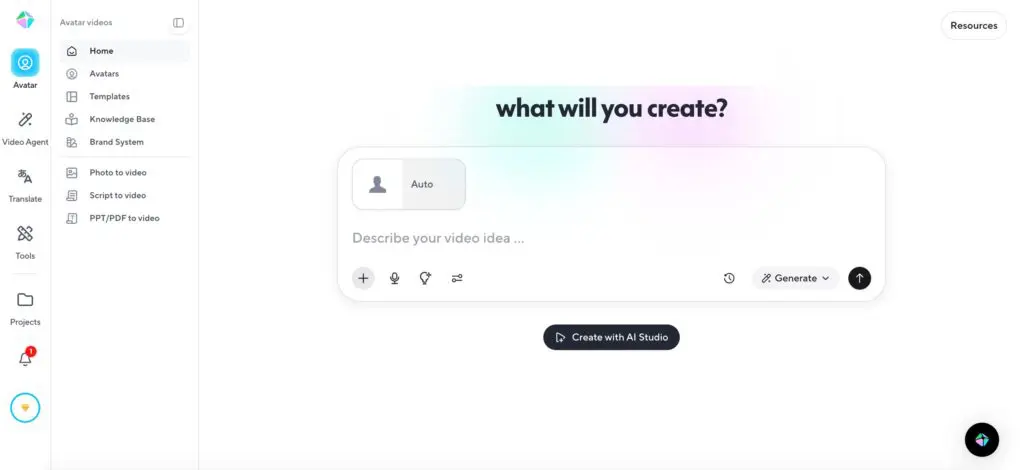
The interface follows consistent spatial logic. Controls remain fixed across projects, reducing the learning curve but limiting deep customization.
First Video Creation
The production sequence follows a linear path:
- Select a template or blank project
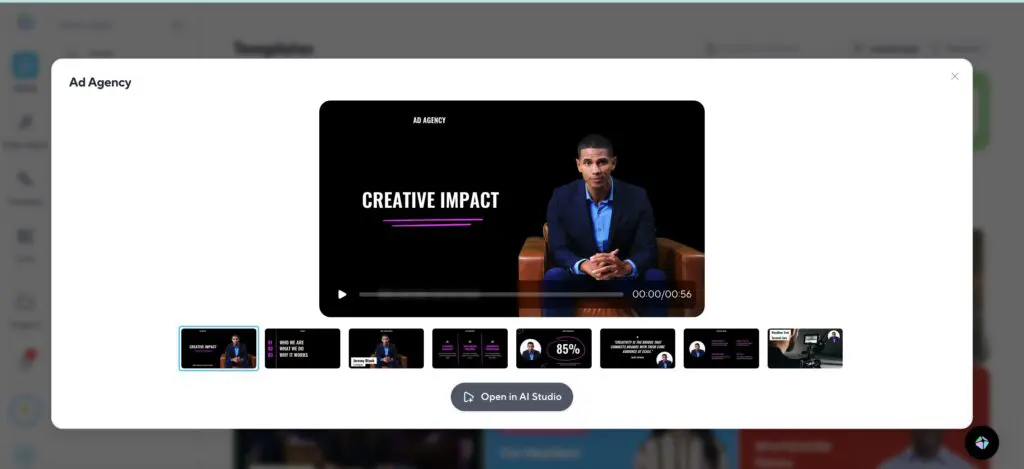
Choose a HeyGen avatar
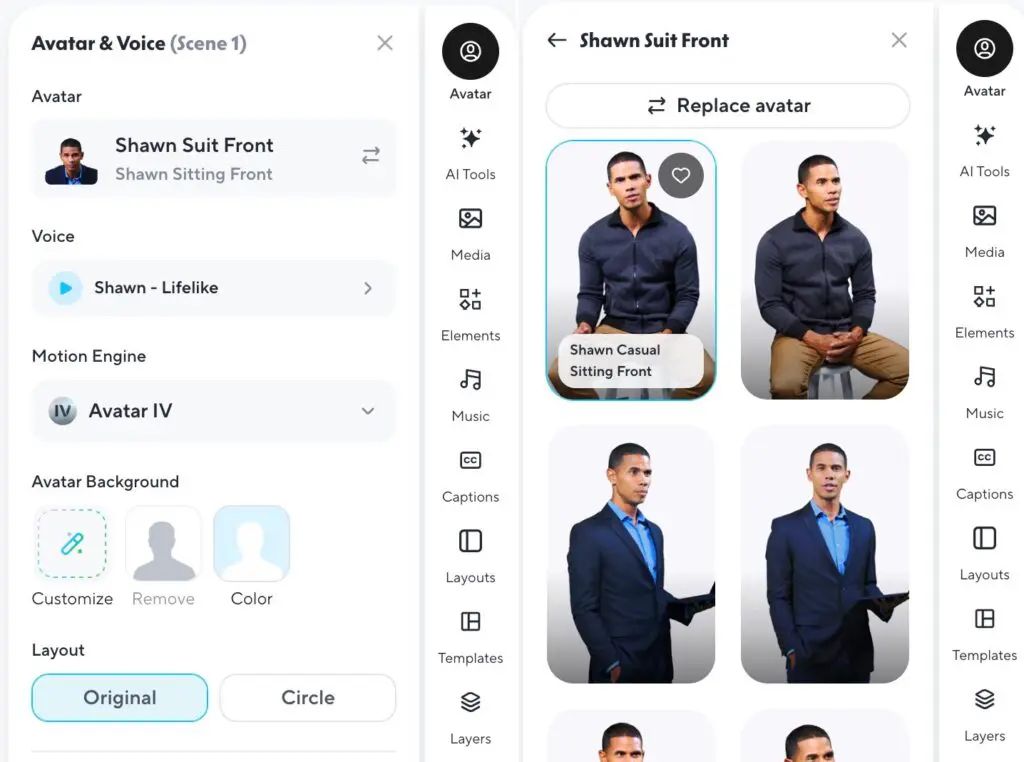
Add a script or upload audio.
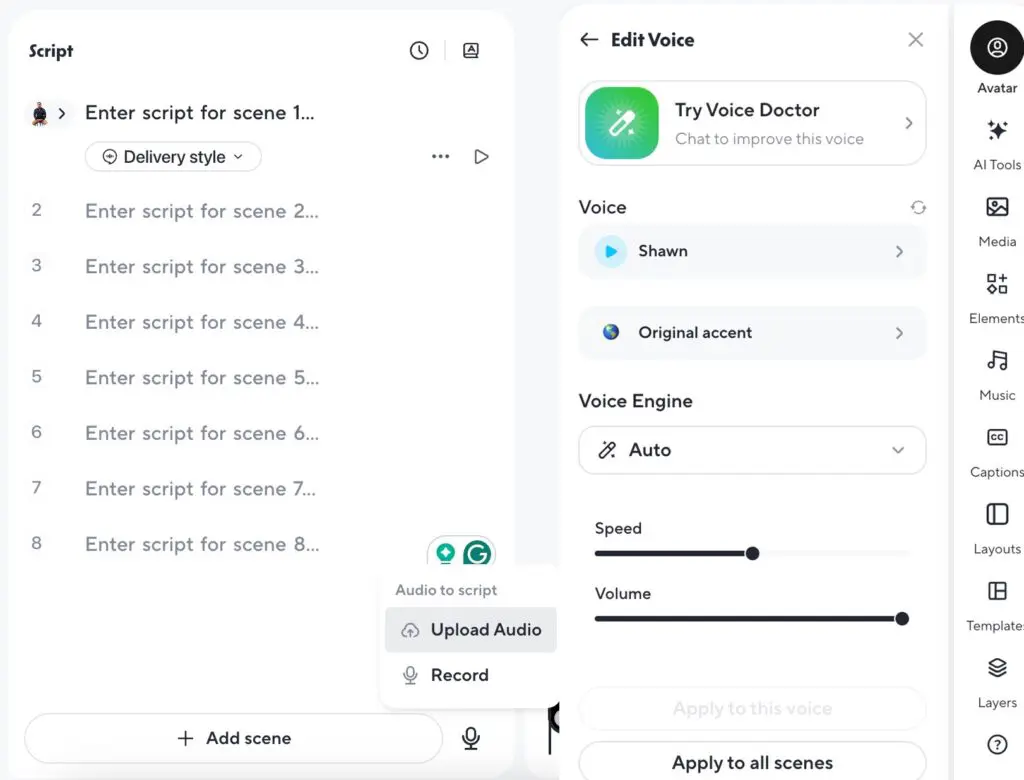
Configure voice and language
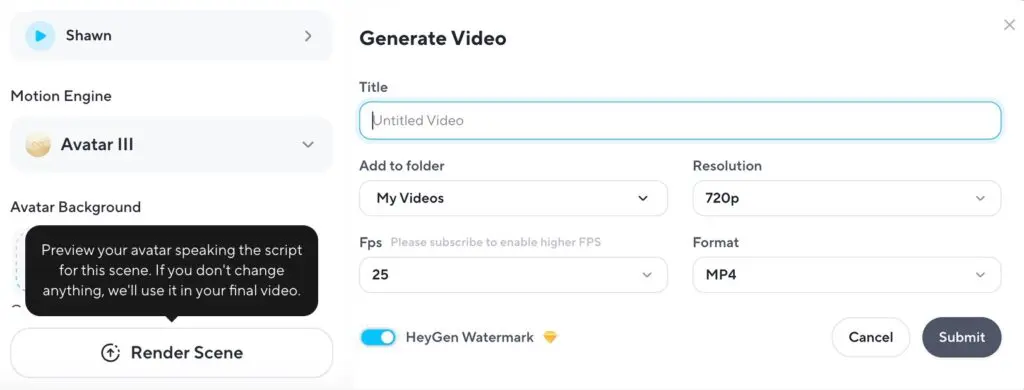
- Render and export
For short instructional videos, the first output is typically achievable within minutes. This speed remains one of the platform’s defining advantages.
How to Create HeyGen AI Avatars
HeyGen AI avatars are AI-generated digital presenters that deliver scripted content with synchronized lip movement and facial animation. They are primarily used for structured videos such as training, onboarding, and explainers.
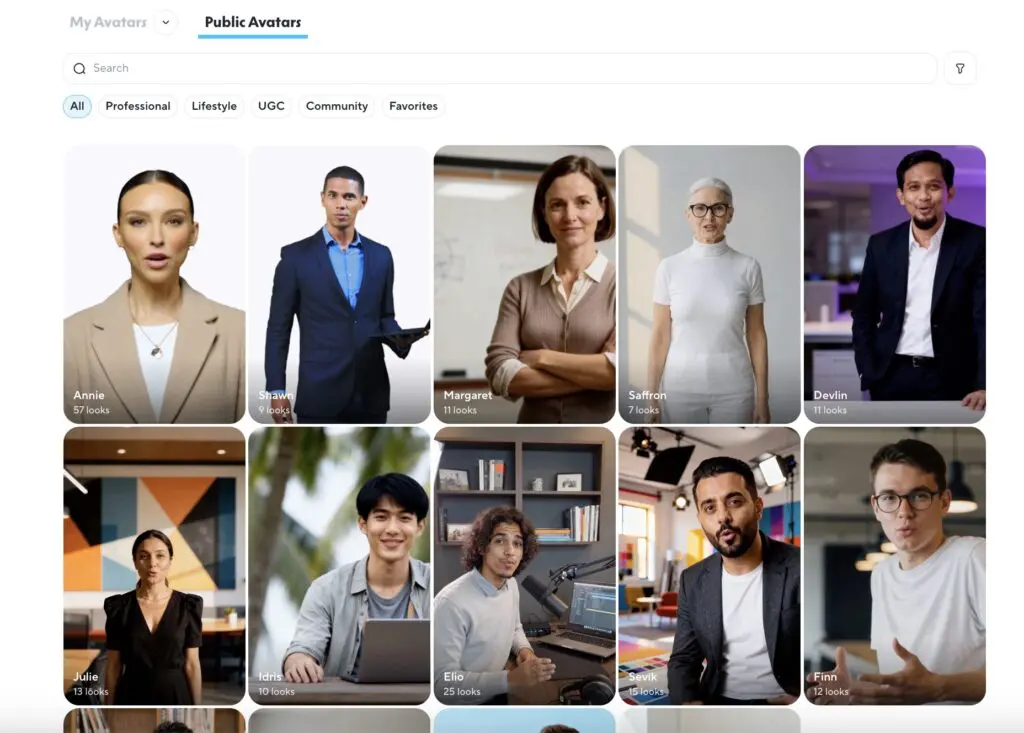
Stock Avatars
HeyGen AI avatars included in the stock library are visually consistent and professionally styled. Lighting, camera angle, and framing are standardized, supporting visual uniformity across videos.
These avatars are suitable for informational delivery but operate within predefined motion parameters.
Custom and Motion-Driven Avatars
Users can create a custom HeyGen avatar using either a static image or a video. Video-based avatars use motion data to drive facial movement and timing.
Motion-driven avatars deliver measurable improvements in:
- Gesture continuity
- Facial pacing
- Speech synchronization
This feature represents the most effective method for improving realism within the system.
Realism Evaluation
At a macro level, HeyGen AI avatars remain convincing. Facial proportions, eye alignment, and mouth movement generally align with speech.
At a micro level, limitations persist:
- Constrained emotional modulation
- Subtle lip-sync drift in complex phrasing
- Limited spontaneous expression
For structured communication, these constraints are acceptable. For performance-driven content, they remain noticeable.
HeyGen Other Features Reviews
HeyGen AI offers a structured video creation platform built around digital presenter avatars, with strong text-to-speech support and multilingual capabilities suited for training and explanatory content. Its template-driven design, stable rendering, and API access make it effective for scalable, standardized video workflows rather than expressive or cinematic production.
Voice and Speech
HeyGen’s text-to-speech engine supports a wide range of languages and accents. Speech clarity is consistent in instructional contexts, making the platform effective for localization.
However, voice delivery remains controlled and neutral. Emotional inflection is limited, reflecting the platform’s design orientation toward clarity rather than performance.
Templates and Visual Composition
The template system enforces disciplined visual structure:
- Centered avatar placement
- Clean typographic hierarchy
- Minimalist background design
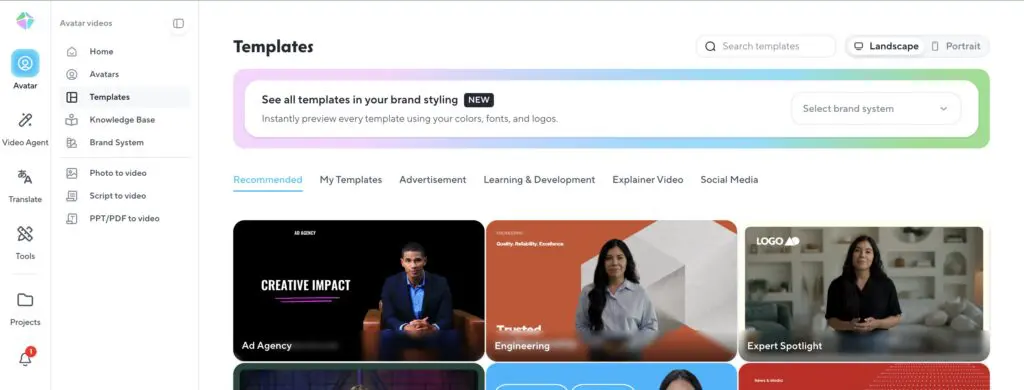
Customization options include color palettes, background selection, and text overlays. Animation control remains intentionally limited.
From a design perspective, this approach prioritizes consistency and reduces revision cycles in collaborative environments.
Multilingual Translation and Localization
HeyGen enables the translation of a single video into multiple languages while preserving avatar continuity. Lip synchronization adapts automatically to translated scripts.
Accuracy remains high for commonly used languages. In more complex linguistic structures, minor alignment inconsistencies may appear.
For organizations managing global communication, this capability significantly reduces production overhead.
Performance and Rendering Behavior
Rendering performance varies based on:
- Script length
- Avatar type
- Platform load
- Subscription tier
Short videos typically render efficiently. Longer or multi-scene projects may experience extended processing times.
Observed behavior includes:
- Stable visual output across templates
- Predictable framing and composition
- Occasional variability in render speed
HeyGen remains operationally reliable but is not optimized for high-volume, real-time cinematic rendering.
HeyGen API and Scalability
The HeyGen API enables automated video generation at scale. Typical applications include:
- Employee onboarding sequences
- Recurring training modules
- Automated multilingual updates
- Scaled personalized communication
For enterprises, API access positions HeyGen as a workflow component rather than a standalone tool. For individual creators, this capability may be unnecessary.
Security, Privacy, and Legitimacy
HeyGen operates on secure cloud infrastructure and adheres to standard data protection frameworks. Enterprise users can opt out of data usage for model training.
Organizations deploying avatar-based communication should conduct internal reviews regarding media uploads and digital likeness usage, particularly in regulated environments.
HeyGen Pricing Structure
HeyGen pricing follows a tier-based model.
Plans scale according to:
- Video duration limits
- Export resolution
- Avatar capacity
- Processing priority
- Collaboration features
From a cost perspective, pricing becomes justifiable when the platform replaces recurring filming, localization, or presenter expenses. For infrequent use, subscription value should be evaluated carefully.
Is HeyGen Free in 2026?
The HeyGen free plan allows limited experimentation. HeyGen AI free access includes restrictions on video length, resolution, and avatar availability.
The free tier works as an evaluation environment rather than a production solution. Branding limitations and export constraints reduce suitability for public deployment.
Users comparing AI video generator free tools may find alternatives with similar trial access. However, those alternatives often sacrifice scalability, consistency, or avatar quality.
Final Evaluation: Still the Best AI Video Generator?
This HeyGen AI review indicates that the platform remains among the most effective solutions for structured, repeatable video communication in 2026.
It is not designed to replace creative video production tools. It is designed to replace inefficient workflows.
For organizations prioritizing clarity, scalability, and multilingual reach, HeyGen continues to represent a strong strategic choice. For creators seeking emotional nuance or cinematic flexibility, alternative systems may be more appropriate.
Whether HeyGen is “the best” depends on alignment between its design philosophy and the user’s communication objectives.
Frequently Asked Questions
Is HeyGen AI worth using in 2026?
Yes, HeyGen AI is worth using in 2026 for businesses and teams that need scalable, presenter-style video content. It is especially effective for training videos, onboarding, product explainers, and multilingual corporate communication.
What is HeyGen AI used for?
HeyGen AI is used to create AI-generated presenter videos using digital avatars and text-to-speech. It is commonly used for internal training, HR onboarding, marketing explainers, product walkthroughs, and localized business messaging.
How realistic are HeyGen AI avatars?
HeyGen AI avatars are realistic enough for professional and instructional use. Motion-driven custom avatars offer better facial synchronization and gesture continuity, though emotional expression and spontaneous movement remain limited.
Is HeyGen better than other AI video generators?
HeyGen is better than many AI video generators for structured, repeatable video production. It prioritizes workflow efficiency, consistency, and multilingual scalability rather than cinematic creativity or emotional performance.
Does HeyGen support multiple languages?
Yes, HeyGen supports multilingual video creation and automatic translation. Users can generate videos in many languages while keeping the same avatar, layout, and visual structure.
Is HeyGen AI free in 2026?
HeyGen offers a free plan in 2026 with limited video length, lower resolution, restricted avatars, and branding constraints. The free plan is intended for testing and evaluation, not professional deployment.
How much does HeyGen cost?
HeyGen pricing is based on subscription tiers. Costs depend on video duration limits, export resolution, avatar access, processing priority, collaboration features, and API usage. It becomes cost-effective when replacing ongoing filming or localization expenses.