AI-generated writing is no longer an exception. It has become part of how essays, reports, articles, and research drafts are produced. Students use it to brainstorm. Professionals use it to speed up drafts. Editors use it to clean up language. The boundary between human writing and AI-assisted writing has blurred enough that telling the difference is no longer simple.
This shift has made one name unavoidable in academic discussions: Turnitin.
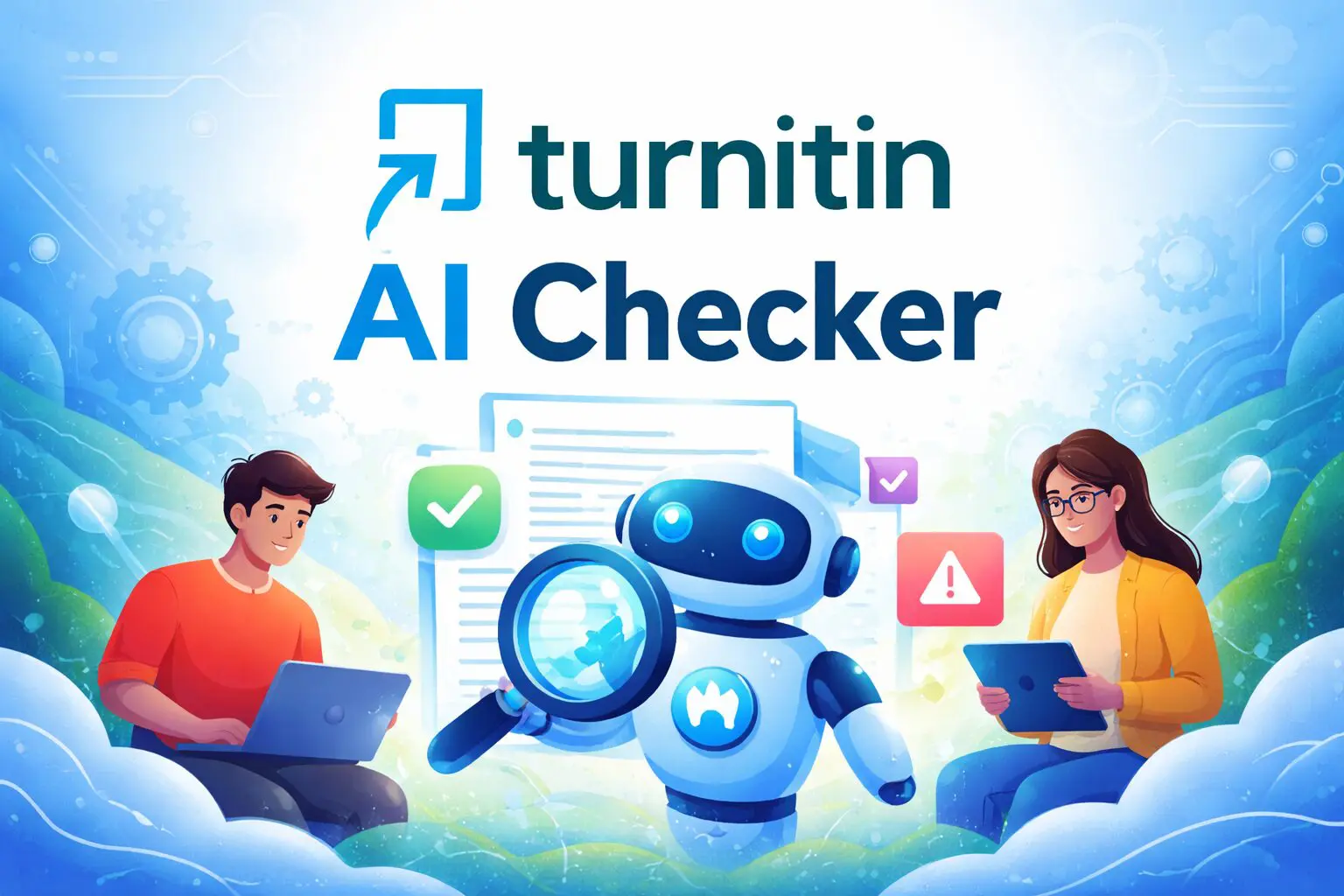
The Turnitin AI checker is now one of the most widely discussed AI detection systems used by universities to review student writing.
For some students, Turnitin feels like an invisible judge scanning every submission. For instructors, it is positioned as a safeguard against plagiarism and, more recently, AI-generated writing. For institutions, it represents consistency and scale.
But what does the Turnitin AI checker actually do? Does Turnitin detect AI reliably? Can it detect ChatGPT? How accurate is it, and what happens if your work gets flagged? The answers are more nuanced than many people expect.
What Is the Turnitin AI Checker?
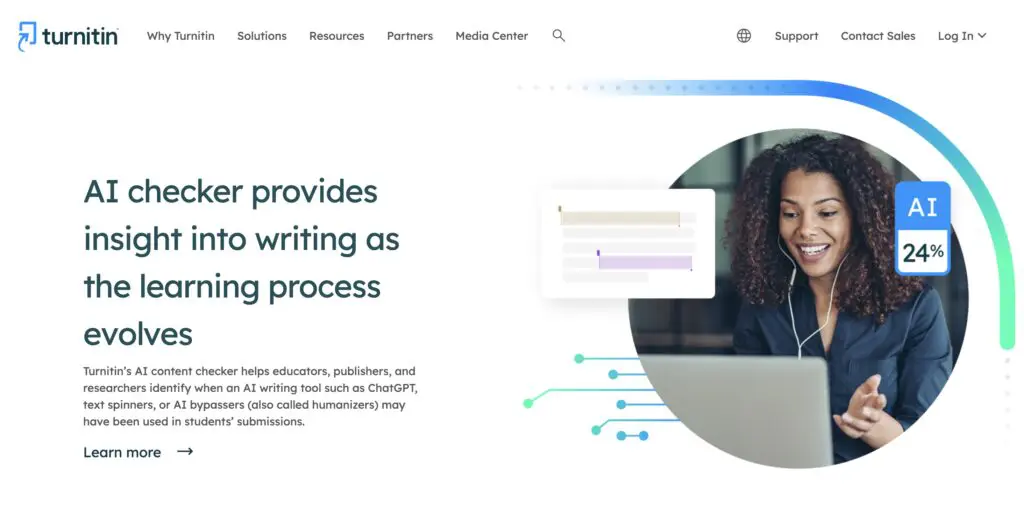
The Turnitin AI checker is part of Turnitin’s broader AI detection system, used by academic institutions to assess whether writing may have been generated by AI tools like ChatGPT. It is built directly into the enhanced Similarity Report that instructors already use.
In practice, the Turnitin AI writing detector works alongside plagiarism checks, giving instructors additional context rather than definitive answers.
The Turnitin AI writing detector estimates how much of a submitted text may have been generated by AI. Instead of flagging individual sentences, it provides an overall percentage that reflects how strongly the text aligns with patterns commonly found in AI-generated writing.
This tool is designed for instructors and institutions, not as a self-checking system for students. Access to reports depends entirely on institutional settings. Some students can see their reports, others cannot.
That distinction matters. Turnitin is not meant to help students optimize their writing to avoid detection. It exists to support review and discussion within academic workflows.
How Turnitin AI Checker Works
Turnitin does not identify authorship. It does not compare submissions to a database of AI responses. Instead, it analyzes how the text behaves.
AI-generated writing tends to be statistically predictable. Sentence lengths stay consistent. Phrasing follows common patterns. Human writing usually contains more variation, uneven rhythm, and stylistic shifts.
Turnitin compares these characteristics against large datasets of known human and AI-generated writing. Based on that comparison, it produces a probability estimate.
This estimate is a signal, not a verdict. Turnitin explicitly states that AI detection should support human review, not replace it.
Turnitin AI Checker Accuracy and Its Limits
Discussions around Turnitin AI accuracy often miss the point that detection is probabilistic, not definitive. Turnitin does not publish a single accuracy percentage that applies across all scenarios. Accuracy varies depending on:
- Text length
- Writing style
- Subject matter
- Level of editing
Formal academic essays are easier to evaluate. Creative writing, reflective pieces, or heavily revised drafts blur the signals that detectors rely on.
False positives can occur. False negatives can also occur. This is why Turnitin advises institutions to avoid treating AI scores as definitive proof of misconduct.
Turnitin False Positives: Why They Happen
False positives occur when human writing resembles patterns common in AI-generated text. This happens more often than many students realize.
Common causes include:
- Formal academic tone
- Repeated technical terminology
- Clear, structured arguments
- Extensive editing for clarity
Ironically, strong writing can sometimes look AI-generated. This is why AI detection scores must be interpreted carefully and in context. These Turnitin false positives highlight why AI detection scores should never be treated as proof on their own.
How Reliable Is Turnitin on Edited or Mixed AI Content?
Turnitin works best when text is clearly human-written or clearly AI-generated. Once content becomes mixed, reliability drops.
Heavily edited or partially rewritten AI content introduces natural variation that weakens detection signals. Turnitin does not officially claim to detect “humanized” AI text, and it does not guarantee detection of blended writing.
This limitation is shared across all AI detectors, including Copyleaks, Originality AI, and GPT Zero. As editing increases, certainty decreases.
What Turnitin AI Percentages Are Considered “Okay”?
One of the most misunderstood aspects of the Turnitin AI checker is how its percentage scores should be interpreted. Turnitin displays an overall AI detection percentage. Scores below 20% are typically not shown to instructors to reduce misinterpretation.
In practice, percentages are generally understood like this:
- Below 20%: Low signal. Minor AI-like patterns can naturally appear in human writing.
- 20% to 50%: Mixed signals. May reflect partial AI assistance, heavy editing, or highly structured writing.
- Above 50%: Stronger AI alignment and usually prompts closer review.
Importantly, these scores are not proof. Turnitin states clearly that AI percentages should not be used alone to make disciplinary decisions.
Which AI Models Does Turnitin Detect?
Turnitin does not publish an official list of specific AI models it detects. Instead, it describes its system as identifying writing patterns commonly produced by modern large language models. This approach is central to how Turnitin AI checker operates across different AI writing systems.
In practice, this means Turnitin is designed to flag text that resembles output from widely used generative AI systems, including models similar to the following:
- OpenAI models: ChatGPT-style systems based on GPT architectures used for essay and paragraph generation
- Anthropic models: Claude-style language models commonly used for long-form and academic-style writing
- Google models: Gemini-style generative AI used for structured informational content
- Meta models: LLaMA-based language models adapted for general-purpose text generation
- Other large language models: Modern transformer-based AI systems trained to produce fluent, multi-paragraph text
Turnitin’s detection is model-agnostic, meaning it does not look for fingerprints from a single named tool. Instead, it analyzes writing behavior that tends to appear across many AI systems.
This approach allows Turnitin to adapt as new models are released, but it also means detection is not guaranteed for every AI tool or writing style. As models evolve and users edit AI output more heavily, the distinction between human and AI writing becomes harder to measure.
Turnitin detects patterns, not platforms.
Can You Bypass Turnitin AI Detection?
Yes, Turnitin’s AI detection can be bypassed. This is not a secret, and it is not unique to Turnitin. All current AI detection systems rely on statistical patterns in writing, and those patterns weaken as text becomes more human-driven.
Detection confidence typically drops when:
- AI-generated text is heavily rewritten by a human
- The structure of the original draft is reorganized or reshaped
- The writer adds original explanations, examples, or reasoning
- AI-generated sections are mixed with personal writing
- The text is written or revised in stages, rather than pasted as a complete AI output
However, this point is often misunderstood.
Bypassing detection usually requires significant human effort. When someone edits AI-generated text deeply enough to avoid detection, they are no longer submitting raw AI output. At that stage, the writing reflects original thinking, judgment, and understanding.
Trying to “beat” Turnitin is the wrong goal. The real purpose of academic work is to demonstrate comprehension and reasoning. If a student can explain their ideas, defend their arguments, and show how the work was developed, AI detection becomes largely irrelevant.
What Happens If You Get Flagged by Turnitin?
Being flagged by Turnitin does not automatically result in punishment.
In most institutions, a high AI detection score triggers a review process, not disciplinary action. Turnitin itself emphasizes that AI detection results should never be used as standalone evidence.
When a submission is flagged, instructors are generally expected to:
- Read the work carefully and assess it manually
- Compare the writing style to previous submissions
- Ask the student to explain their ideas or reasoning
- Review drafts, outlines, or notes if clarification is needed
The outcome depends heavily on context and institutional policy. A detection score alone does not prove misconduct. In many cases, it simply starts a conversation.
Students who can clearly explain their thinking, sources, and process are rarely penalized based solely on AI detection results. Problems usually arise only when a student cannot demonstrate understanding of their own submission. Turnitin’s AI checker is meant to support academic judgment, not replace it. Human review remains the final authority.
Is Turnitin the Best AI Content Detection Tool in 2026?
No single AI detection tool is the best. AI detection is an evolving field. As AI writing improves, detection becomes harder. Turnitin’s strength is not perfect accuracy but institutional consistency and integration into academic workflows. Its value lies in supporting review and conversation, not delivering verdicts.
The Bigger Picture: Quality Over Detection
AI-assisted writing is here to stay. The real question is not whether AI was used, but whether the work shows understanding, originality, and value.
Detection tools can highlight patterns. They cannot evaluate thinking.
Turnitin helps surface questions, not answers. Used responsibly, it supports transparency. Used incorrectly, it creates fear and false certainty. The future of writing will not be decided by detectors. It will be decided by standards, judgment, and quality. AI can assist. Humans still decide what matters.
Buzzcube provides content writing services focused on quality first. Human-led thinking, strong structure, and careful editing ensure content that reads naturally and stands up to editorial and academic scrutiny. If you want writing built for credibility, fill out the form.
Frequently Asked Questions
Does Turnitin Detect AI and ChatGPT Content?
Yes, Turnitin can detect AI-generated writing, including content produced by tools similar to ChatGPT. It does this by analyzing writing patterns commonly found in large language models rather than checking against a database of AI responses. Detection works best on text that closely resembles raw AI output. Once writing is heavily edited, rewritten, or mixed with human input, detection becomes less reliable.
How Accurate Is Turnitin AI Detection?
Turnitin does not provide a single accuracy percentage that applies to all cases. Accuracy depends on text length, writing style, and how much editing has been done. Formal academic writing is easier to analyze. Creative or heavily revised writing produces less reliable results. Turnitin itself advises that AI detection scores should be interpreted carefully and reviewed by a human.
Can Turnitin Produce False Positives?
Yes. Turnitin false positives do occur. Human-written text can sometimes match patterns associated with AI-generated writing, especially when the writing is highly structured, formal, or heavily edited. For this reason, Turnitin recommends that AI detection scores be used as indicators rather than proof.
What AI Percentage Is Considered Acceptable in Turnitin?
Turnitin typically does not surface AI scores below 20% to instructors. Low percentages often reflect normal writing patterns rather than AI use. Higher percentages may prompt review, but they do not automatically indicate misconduct. Context, drafts, and the student’s ability to explain the work matter more than the number itself.
Can Students Check Their Work Using Turnitin AI Checker?
In most cases, students cannot independently run AI detection checks using Turnitin. Access is controlled by institutions and instructors. Some students can view their reports, while others cannot. Turnitin is designed as an institutional tool, not a self-checking system for students.
Can You Bypass Turnitin AI Detection?
Yes, Turnitin AI detection can be bypassed, particularly when AI-generated text is heavily rewritten or combined with original writing. However, bypassing detection usually requires substantial human effort. At that point, the writing reflects original thinking rather than raw AI output. Turnitin is designed to catch low-effort submissions, not thoughtful work.
What Happens If Turnitin Flags Your Work as AI?
Being flagged does not automatically lead to penalties. In most institutions, a high AI score triggers review rather than punishment. Instructors are expected to read the work, consider context, and may ask the student to explain their ideas or process. Turnitin explicitly cautions against using AI detection results as definitive evidence of misconduct.
Is Turnitin the Best AI Plagiarism Checker for Students?
Turnitin is not designed primarily as an AI plagiarism checker for students. It is an academic integrity tool built for institutions. No AI detector is fully reliable on its own. Turnitin’s strength lies in consistency and integration with academic workflows, not perfect AI detection accuracy.
Does Using AI Automatically Mean Cheating?
Not necessarily. Many institutions allow limited AI use for brainstorming, outlining, or editing. Problems arise when AI-generated content is submitted as original work without understanding or attribution. Policies vary, so students should always follow their institution’s guidelines.