
LinkedIn has become one of the most effective platforms for freelancers who want steady, high-quality work. While it is often associated with job hunting, most decision makers use LinkedIn in a very different way. They use it to research people, validate expertise, and identify specialists when they need outside help.
Freelance work on LinkedIn does not come from browsing job listings or applying to open roles. It comes from being visible in search results, having a clear and credible profile, and showing up consistently in the right places.
When used correctly, LinkedIn allows freelancers to connect directly with founders, managers, and team leads who have both budget and authority. This makes it one of the strongest channels for long-term client acquisition.
This guide explains how to freelance on LinkedIn in a practical and repeatable way. It focuses on how clients actually use the platform, how LinkedIn search works, and how freelancers can position themselves to get clients without relying on job boards.
Why LinkedIn Works for Freelancers
LinkedIn works for freelancers because it is built around professional intent. People open LinkedIn to solve business problems, build teams, and make decisions. This creates an environment where services and expertise are naturally in demand.
Most companies today rely on freelancers in some form. Startups use external specialists to move faster. Agencies hire freelancers to scale capacity. Established teams bring in freelance experts for short-term or specialized work. LinkedIn is where many of these buyers go first to evaluate potential partners.
Another reason LinkedIn for freelancers works well is transparency. A LinkedIn profile shows work history, connections, endorsements, recommendations, and activity in one place. This reduces friction for clients. They can assess credibility quickly before starting a conversation.
LinkedIn also rewards long-term consistency. An optimized profile continues to appear in search results over time. Unlike freelance platforms where listings disappear, LinkedIn profiles remain discoverable as long as they are relevant and active.
Freelancing on LinkedIn is especially effective for service-based professionals, including freelance designers, developers, marketers, consultants, writers, and strategists. If your work solves a clear business problem, LinkedIn is likely a strong channel for you.
How Clients Find Freelancers on LinkedIn
To get freelance work on LinkedIn, it is important to understand how clients actually find people.
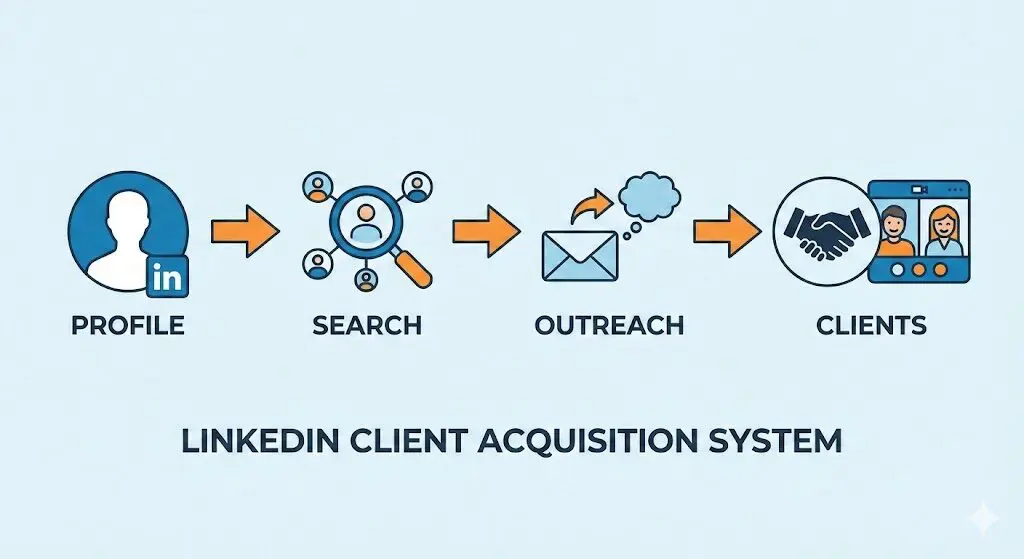
LinkedIn search is the primary discovery method
Most clients start with LinkedIn search. They type in job titles, services, tools, or skills related to what they need. LinkedIn then ranks profiles based on relevance and activity.
Several parts of your profile influence whether you appear in these searches:
- Headline and role descriptions
- About section keywords
- Experience details
- Skills listed on your profile
This is why clear positioning matters more than clever wording.
Network proximity increases trust
Second-degree connections play a major role in client decisions. People are more likely to contact freelancers who are connected to someone they already know. Each relevant connection increases the chance that your profile appears in search and recommendations.
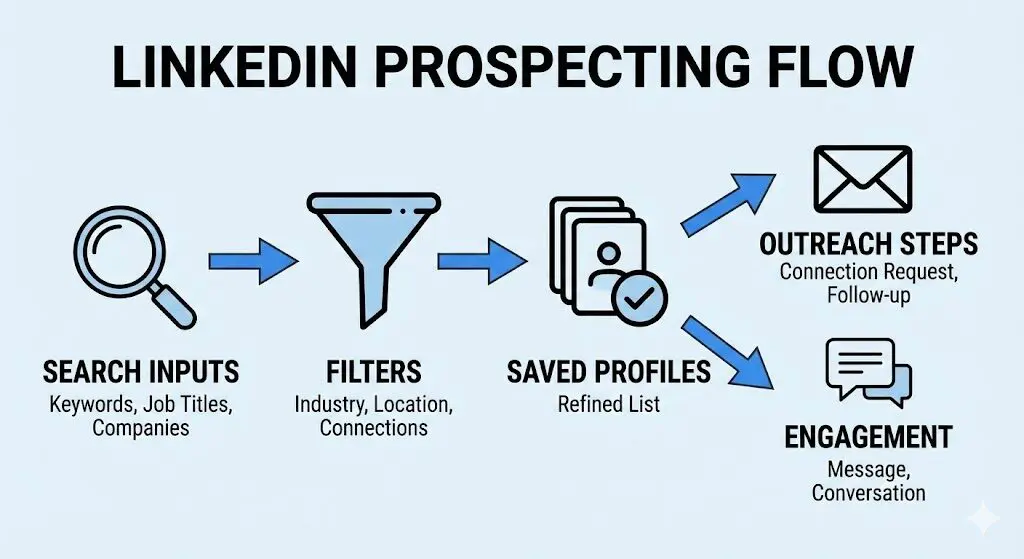
This is where LinkedIn prospecting becomes powerful. Building a relevant network improves both visibility and credibility over time.
Content supports visibility and recall
Content is not always the first touchpoint, but it supports discovery. Clients often notice freelancers through comments or posts long before they need help.
Repeated exposure builds familiarity. When a problem arises, clients often remember people they have seen consistently and check their profiles.
Informal opportunities happen every day
Many freelance opportunities are not posted as formal job listings. Clients often ask for recommendations or advice in posts and comments. Freelancers who stay active can spot these opportunities early and join the conversation naturally.
Getting clients on LinkedIn rarely comes from one action. It is the result of search visibility, network reach, profile clarity, and consistent activity working together.
Set Up a LinkedIn Profile That Attracts Freelance Clients
Your LinkedIn profile is often the first impression a potential client has of you. Before replying to a message or booking a call, most people will scan your profile to decide whether you are relevant to their problem.
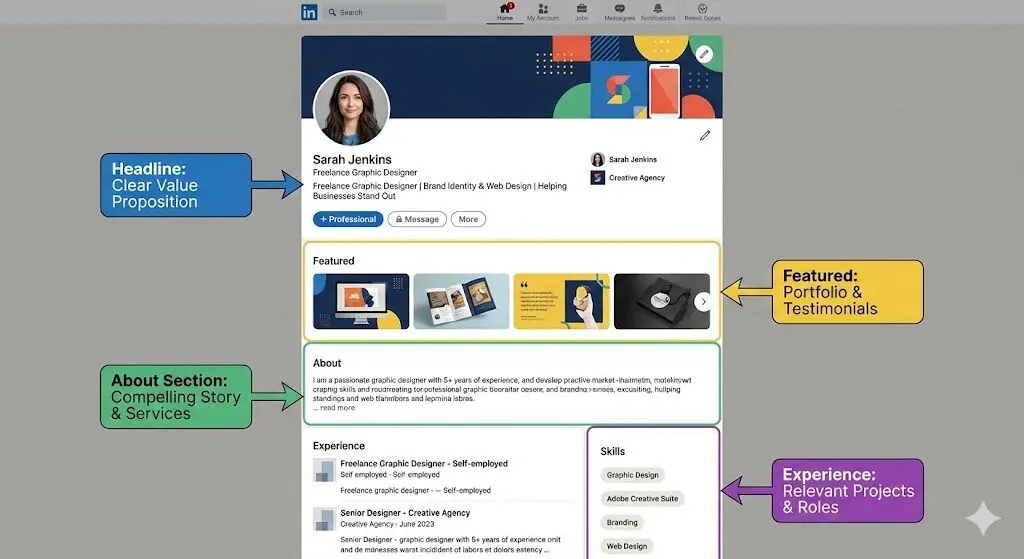
A strong profile does not try to impress everyone. It speaks clearly to a specific type of client and makes it easy for them to understand what you do.
Start With a Headline That Explains Your Freelance Offer
Your headline plays two roles. It helps LinkedIn understand who to show your profile to, and it helps people quickly decide whether to keep reading.
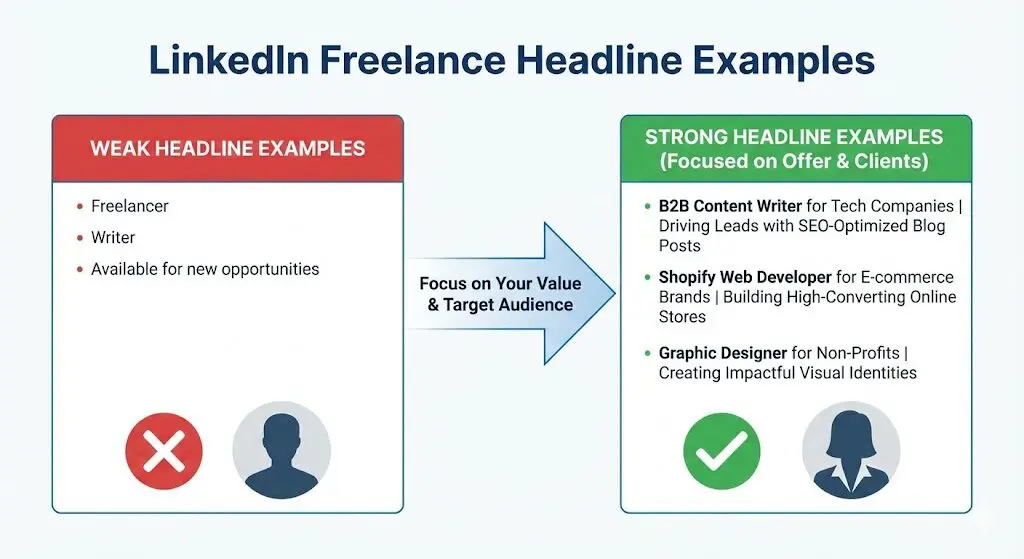
Avoid vague titles that only describe your role. Instead, focus on the service you provide and the type of clients you help.
A clear freelance headline usually includes:
- Your core service
- The type of client or industry you work with
- The main problem or outcome you help with
For example, instead of listing yourself as a “Freelance Web Developer,” explain what kind of work you do and for whom. This improves both search visibility and clarity.
Keep the language simple. Use keywords that clients would actually search for.
Write an About Section That Builds Trust and Interest
The About section is where many freelancers lose potential clients. Long career summaries and personal stories often push people away.
This section should help a client quickly understand:
- What you do
- Who you do it for
- What problems you solve
Start with a short, clear opening that explains your service. Follow with a few lines that describe how you help clients and what makes your approach effective.
If you have results or outcomes, mention them briefly. Focus on the impact rather than the process.
End the About section with a simple next step. Invite people to send a message, view your portfolio, or ask a question.
Use Experience, Skills, and Proof to Increase Visibility
Many freelancers underuse the Experience and Skills sections, even though these areas strongly influence LinkedIn search.
Add freelance experience correctly
List your freelance work as a role, even if you are self-employed. Describe the type of clients you work with and the services you provide.
Avoid listing every task. Focus on outcomes and responsibilities that matter to clients.
Showcase case studies and portfolios
Use the Featured section to highlight proof. This could include:
- Case studies
- Portfolio links
- Project breakdowns
- Client testimonials
Make it easy for someone to evaluate your work without asking for extra information.
Use the Skills section strategically
LinkedIn uses skills as a ranking signal in search results. Clients and recruiters both filter profiles based on skills.
Add skills that are directly related to your freelance services. Avoid adding too many unrelated skills, as this can dilute your profile.
Endorsements strengthen these signals. Profiles with endorsed skills tend to appear more credible and visible.
You can request endorsements by:
- Asking past clients or collaborators after completing a project
- Endorsing others first and following up politely
- Sending a short, direct message explaining which skill you would like endorsed
Keep requests respectful and specific.
Do Not Ignore Profile Basics
Small details can affect how professional your profile looks.
Use a clear profile photo with good lighting. Your face should be visible and easy to recognize.
Your banner should support your positioning. A short statement about your service or niche works well.
Create a custom LinkedIn URL to make your profile easier to share.
Check your contact information and visibility settings. Make sure people can contact you without friction.
Use Content to Attract Freelance Work on LinkedIn
Content on LinkedIn plays a supporting role in client acquisition. Its purpose is not to generate immediate leads, but to reinforce credibility and keep your profile active in front of the right audience.
For freelancers, effective content is simple and focused. Explaining how you approach a specific problem, sharing lessons from recent projects, or breaking down common mistakes in your niche is often enough. These posts help potential clients understand how you think and whether you are relevant to their needs.
Posting once or twice per week is sufficient. What matters is clarity and consistency. Over time, this creates familiarity. When someone later receives an outreach message from you or encounters your profile through search, your content provides context and trust.
Engagement is just as important as posting. Thoughtful comments on posts from founders, managers, and peers place your profile in front of people who already operate in your target market. This form of visibility compounds and often leads to profile views and inbound messages without direct outreach.
Common LinkedIn Mistakes Freelancers Make
Most freelancers struggle on LinkedIn because their actions do not match how the platform is used by clients. The mistakes below are common and often easy to fix once you are aware of them.
- Positioning the profile like a resume
Profiles written for recruiters tend to focus on responsibilities and job titles. Clients look for problems solved, services offered, and outcomes delivered. - Being too broad or unclear
Trying to appeal to everyone usually results in appealing to no one. Vague headlines and generic descriptions reduce both search visibility and trust. - Optimizing for keywords without clarity
Adding too many unrelated skills or stuffing keywords into the profile confuses LinkedIn search and human readers. - Sending pitch-heavy outreach messages
Messages that introduce services too early often get ignored. Clients respond better to relevant, conversational openers. - Ignoring follow-ups
Many replies happen after the first message. Not following up leaves opportunities on the table. - Inconsistent activity
Updating the profile once and then disappearing limits results. LinkedIn rewards steady, light activity over time. - Expecting immediate results
LinkedIn is a compounding channel. Visibility and trust build gradually through repetition and relevance.
Avoiding these mistakes alone puts most freelancers ahead of the average LinkedIn user.
A Practical Weekly LinkedIn System for Freelancers
A sustainable LinkedIn system does not require hours of daily effort. What it requires is structure and repetition.
Each week should include a balance of three activities. First, profile maintenance and visibility through light engagement. This means commenting on relevant posts and staying present in your niche. Second, outreach and conversations with potential clients. This includes replying to messages, following up, and starting new conversations through search. Third, content that reinforces your expertise and keeps your profile active.
When these elements are combined consistently, LinkedIn begins to work as a pipeline rather than a random opportunity source. Results compound over time, and effort decreases as visibility increases.
Final Thoughts on Freelancing on LinkedIn
LinkedIn works best for freelancers who treat it as a long-term client acquisition channel. Clear positioning, a focused profile, and consistent activity create visibility over time. When these elements work together, LinkedIn becomes a reliable source of inbound and outbound opportunities.
Freelance work on LinkedIn does not come from chasing every lead. It comes from being visible to the right people, with a clear message, at the moment they need help.
If you are looking for a partner to support your growth beyond LinkedIn, Buzzcube provides web development and design services that help freelancers and businesses convert attention into results. From high-performing websites to scalable digital experiences, Buzzcube focuses on building solutions that support real business goals.